Tuesday, July 19, 2022

7th Irregular Spoon Gathering

I had the good fortune of attending the 7th Irregular Spoon Gathering last week, and it was an absolute blast.  Pat @klipnockywoods puts on a great time, and if you could not make it this year, I highly recommend you try next time around.  I met Pat in 2015, maybe 2013, at one of Oliver Prat's gatherings at his place in the Catskills.  Those were great events, full of creative inspiration and community, and thankfully Pat followed suit with his own gathering at his place in Arkport, NY.  I was unable to attend until now, and I am so glad I made it this time around.

Pat and Matt Fang @mattfang did a great job organizing the event.  Campers had fresh water, toilets, and all the walnut you could carve in a year.  The swimming hole was amazing, letting us rinse off the sweat and wood dust from the day.  Pat's wife and family also made about a million pizzas for the attendees on Saturday night, which were delicious.  I could go on and on.

And so many lovely folks.  (I am writing this part here mostly to remind myself of the connections I made.)  I got to reconnect with Pat, Oliver @oliverpratt_handcraft, Don @don.lalezyty.crafts, and Chuck Trella @chuck.trella_woodsmyths.  Don was about to depart for Sweden to teach some courses at other slöjd gatherings, like Taljfest. Chuck founded @riseupandcarve around 2019, and many of the people at the Gathering were RUAC folks.  We had a great conversation about the community building aspect of RUAC, how it cuts across geographic, political and religious divides to help heal a fractured world, and what future episodes might focus on.  I gotta think that RUAC drew some inspiration from those gatherings at Oliver's all those years ago.  Thanks for all your work, Chuck. 

I also made a lot of new friends.  I laughed until my sides hurt with Emily Rigby @emilierigby, maker of amazing feather spoons, and Ermin @erminelawrence, the recovering academic and gifted spoon carver.  I camped near Ryan @fireside.sloyd, Kyle @fullrangewood, and Joey @greatlakeswoodcraft, and they kindly welcomed me around their stove.  Martin @treenworks had the foresight to bring a lathe and tools, and was busy teaching Matt @mattfang and Canadian Steve @methodmodern how to turn (btw, they did great, both producing bowls far nicer than my first bowl!)  I turned a bit, trading one walnut bowl with Ryan for one of his amazing spoons.  I did have a little accident when the lathe upright suddenly snapped, but my cut finger was attended to by one of the participants (name?) who had decades of experience as a nurse.  The finger never got infected thanks to his superglue suture and is healing well.  And so many more conversations: with Cara @carabnr (who organized the Greenwood Wright's Fest this last April and another this October) about how we need to be taking more about warming up, stretching, and massage to keep us all healthy; with Chris of @weatfieldwoodcraft about the joys and challenges of teaching high school; with Steve @stevenantonucci on electric lathe turning.  And I wish I could have found more time to chat with Kate @mossywoodworkshop from the Pacific Northwest, who with Chuck provided much of the musical entertainment, Willow @willowqjones a homesteader from Alaska, spoon carver Rebecca @rebecca_luerssen, and Dominik from Germany #pogibua and Phil from England @phil_on_ruac who are on a east coast trip to visit with other carvers.  So many interesting and inspiring people.  

Oh, and who can forget the visit from the Slöjd Fairy?

The sloyd fairy made an appearance @mozzy_the_maker

Things got a little cold on the final night, so Cara covered Oliver's feet with wood shavings from the lathe.  "Surprisingly warm," Oliver declared.

And on the final morning, several young carvers came around the fire to work on their spoons.  This young person (daughter of Josh at @jgbklynarbor?) had a wonderful technique, using the instep of her sneakered foot as a work platform.  And look at those socks!

As with other gatherings, I always wish I had taken more photos.  Next time!

Thursday, July 14, 2022

A few new spoon carvers

A few months ago several of my students asked if I could teach them to carve spoons, and with the summer here we found a day to sit down and carve.  We went over the basics of design, axing blanks, knife grips and the idea of "stops," and even a bit of chip carving.  It was a lot to fit into one day, but they were sponges and learned a ton.  Tentative in the morning, both were making bold cuts by the afternoon.  

As with all teaching, I learned a lot myself.  For example, I realized that busting open a round is not something everyone can do quickly or easily--luckily I had prepared some blanks ahead of time so we could keep the day moving. Also, grain direction is not something that everyone immediately understands.  Next time I should spend more time diagramming the direction of the cuts.  Finally, I was happy with their progress with knife grips.  Once a student understands the technique and how safe a grip is if done correctly, they feel more comfortable using their full force in the grip. Once that happens, they make progress in a hurry.  By the end of the day they both had made their first spoons.

Look at the pride on their faces!  Happy spoon parents.  They even gave them names.


Thanks for a great day!  Super proud of you and hope we can carve again soon. 


Thursday, February 3, 2022

Spreading the love

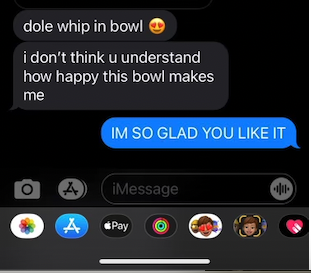
Last summer, my daughter Mae went to sleep-away camp.  While preparing for the adventure and going through the packing list, she decided to bring a wooden bowl and spoon to fulfill the "camp utensils" requirement.  I loved the idea of her taking a piece of home on this adventure--something familiar in an unfamiliar environment.  Apparently, the bowl was a hit among the other campers.  Mae got lots of compliments on her stylish treen from her friends, especially from a very dear friend.  This friend (call her K) made it known that she would love to have a bowl of her own.

Fast forward to a few weeks ago: Mae, spending the weekend with K, decided to give her a bowl.  But rather than grab a new one from the "for sale" stash, Mae chose one from our family shelf.  The bowl she chose had seen use in our house and had the patina to show for it.  It was also defective (cracks in the short grain during drying), which was why it was relegated for home use only.  Yet it was this bowl that Mae wanted to give to her friend.  "It's a good one," she said from experience.

I like to think she chose this bowl because it was loved.  The objects we use every day bear the imprint of use beyond a simple patina.  They represent the good times, the nourishing moments, even the spirit of community that gathered around to enjoy one another.  Now, like a little emissary, this bowl is off to a new home to build new communities. 

A recent text from K to Mae:


Thursday, January 20, 2022

Spoon update

 I have been away from my workshop a lot this winter, but spoons travel well.  These four are now up in the shop if anyone is interested.  Just email me at ericgoodson38@gmail.com.


10" Cooking Spoon with flower chip carving, white birch and walnut oil. $45


5.5" eating spoon ("dolphin" style), with shipwreck kolrosing and shell carving, birch.  $40


Lefty eating spoon, white birch, with meander carving. $40


Righty teaspoon with chip carving and flower. $35


Thursday, November 18, 2021

How does one say "locking lidded box" in Norwegian?


When I started turning, I drew a lot of inspiration from Robin Wood's book The Wooden Bowl. The glossy photographs of porridgers, mazers, and quaiches gave me shapes to imagine and words to describe them with. I still return to the book for ideas--such a great resource. I would encourage you all to run out and get a copy now, but the book is largely unavailable unless you are willing to pay Amazon's bargain-basement price of $975!


Then, sometime around 2014, Jarrod Dahl kindly shared photographs of his research on Scandanavian bowls and locking lidded boxes. About the same time, I also became interested in Roger Abramson, another turner of Norwegian-style ale bowls. For me, this was the first time I was exposed to a new tradition of turning, new forms, new finishes. But finding examples was/is hard. Roger suggests some books for inspiration, like Norske Drikkekar av Tre and Drikkestell for øl i Trøndelag. But unfortunately, like The Wooden Bowl, these books are impossible to find. And there are other books, referenced here and there on people's blogs, also impossible to find (for me at least.) Anyone have a copy of Vackert Svarvat: skönt målat by Svening Svenningson? How about Träsvarvning efter gamla förebilder by Hans Mårtensson? I will give them a good home...


Thus, most of my inspiration comes from the internet, and especially the Digital Museum. This is a great resource, but it can be frustrating to use if you don't speak Norwegian. Yes, the site can be set to English, but how do you know what terms to search for? Search for "bowl" and you get some results, but not what you might want if you turn wooden bowls.


So, this post is to help those out there looking for inspiration from the Digital Museum but not sure what keywords to use. 

Try searching for:
  • "Skål," relating to the word "shell," a shallower shape, more open.
  • "Bolle," relating to the word "ball," a deeper, rounder, more closed shape.
  • "Ølbolle" or "ølskål" is a "beer bowl." Some with a pronounced foot, some with a tiered interior, some with the classic ale bowl profile that Jarrod popularized.


  • "Vangar," a bowl with two ears--what I came to know was a "porridger" from the English tradition.


  • "Snippebolle" or "snippeskål," a bowl with four ears. I have also seen them called "snibbskal."


  • "Trøys," a spouted bowl for serving beer or milk.  Roger makes amazing examples of these!


If you have further suggestions, please share them in the comments! I am especially looking for a search term or phrase for what I know as "locking lidded boxes", like below.


**Update (11/25/21): Many thanks to my friend and fellow turner Etienne for his answer to the locking lidded box question: "skruvask" or "skruvasken." 
**Update (2/18/26): During my visit to the Vesterheim Museum in Decorah, Iowa, in June of 2025 did not find any of these forms in their collection.  They did have other canisters, but not with tabs.   Were these forms produced at all in Norway?  
Google searches for Skruvask reveal auctions of historic examples for about $200-$300.


Thursday, November 11, 2021

Shop update

Snibbskal flying out the door...
 
    When the pandemic hit and all of our lives changed, I was able to ramp up my woodturning.  The commute to my day job disappeared when I started teaching my classes from the comfort of my home.  Turning bowls in my spare time became possible: teach, run down to the shop and turn, brush off the shavings, and run back to my room for the next class. It was a sweet life...
    I was really pleased with that surge of output, feeling like the consistency was allowing me to produce some of my best work yet.  But just as my output went up, full-time craftspeople were really struggling.  No longer able to teach, they came to rely very heavily on craft sales, and in such a moment it just did not feel right to put my stuff up for sale.  So I boxed it all up and tucked it away in my shop.
    Since then life has returned to a "new normal."  I am back in the classroom, teaching history from behind a mask.  Professional woodworkers are also returning to the classroom, providing an important income stream.  I was excited to hear from Jarrod Dahl during a recent Zoom seminar on crooked knife history and design that he just bought a building and plans to open The Woodspirit School of Traditional Craft.  Keep your eyes open for that!  
    And so, with things stabilizing, I have decided to update my Shop with some of what I turned last year.  So far the response has been humbling, as several bowls have sold in just the past week.  Thanks to all for your support!  If you see anything that strikes your fancy, send me an email at ericgoodson38@gmail.com.  My next shop update will focus on spoons, specifically eating spoons.  More soon...

Wednesday, October 13, 2021

The marks of life


    It has been a while since my last post.  Life threw a few curveballs, precipitating a move to a new home, a new job for my spouse, new schools for the kids, a new commute for me, etc...  The dust is settling now, literally, as we finish renovating, much of the work we did ourselves (demo, paint, flooring, kitchen, doors, trim, etc...)  Now a new normal is settling in, allowing for a little more time to enjoy life and heal from the transition.

    And so, this past weekend we took time out for ourselves and went to the local country fair.  The weather was glorious, clear, and crisp, and the foliage was near its peak.  Changing leaves always make me wistful and nostalgic, as they so clearly announce the passage of time.  And so we seized the moment, eating ridiculous fried food, wondering at the enormity and power of oxen, and watching the kids spin themselves silly on rickety rides. 

    We also enjoyed the local craft offerings, of which there were many.  So many skilled craftspeople in our area, especially the quilters and potters.  Around here, there are always more of these folk than woodturners.  Of the turners that I do come across, they generally seem to be working in the same genre: electric lathes, dry wood, and lots and lots of sanding.  The end result shows off the grain of the wood to be sure, but to me, it invariably looks machine-made.  Any sign of life, in the wood itself or in the marks left by the maker, has been obliterated--dried, sanded, and polished out of existence.  The skills demonstrated are admirable, but I am not personally drawn to the end product.  And this is pretty much the only type of turning represented at my local craft fairs.

    As my life settles down and I can again return to turning, I am reminded of what draws me to this process.   I love the way greenwood moves, the way it exerts its own energy and takes the form it wants.  I appreciate the marks left by the maker--the turning cuts and even the axe scars that bear testimony to the hand that made the object.  I enjoy observing paint wear with use, marking the passage of time, like seasons changing and leaves falling in autumn.